Showing posts with label Olympus 14-42 zoom. Show all posts

Thursday, 22 September 2011

Micro Four Thirds is really rubbish at high ISO's - right?


Olympus E-P3 14-42mm zoom ISO 3200

Olympus E-P3 14-42mm zoom ISO 3200

Olympus E-P3 14-42mm zoom ISO 3200

Olympus E-P3 14-42mm zoom ISO 3200

Olympus E-P3 14-42mm zoom ISO 3200

Olympus E-P3 14-42mm zoom ISO 3200

Olympus E-P3 14-42mm zoom ISO 6400

Olympus E-P3 14-42mm zoom ISO 6400

Olympus E-P3 14-42mm zoom ISO 6400

Olympus E-P3 14-42mm zoom ISO 6400

Olympus E-P3 14-42mm zoom ISO 6400

Olympus E-P3 14-42mm zoom ISO 6400
 Olympus E-P3 14-42mm zoom ISO 6400


Monday, 12 September 2011

m4/3 is still the most useful format for what I do

Olympus E-P3 12mm f/2 Panasonic G3 Leica 25mm f/1.4

Despite using a lot of different cameras and enjoying the results, m4/3 is still the format that works best for what I do.

Olympus E-PL1 Panasonic Leica 25mm f/1.4
Created from 15 separate images (three rows of 5) stitched together in Photomerge in Photoshop. Original is a 135MB file, (the equivalent of a 47MP sensor)

Olympus E-P3 Panasonic Leica 25mm f/1.4
Created from 5 separate images stitched together in Photomerge in Photoshop. Original is a 87MB file, (the equivalent of a 30MP sensor)

Olympus E-PL1 12mm f/2
Created from 3 separate images stitched together in Photomerge in Photoshop. Original is a 68MB file, (the equivalent of a 24MP sensor)

Olympus E-P3 14-42mm zoom
Created from 4 separate images stitched together in Photomerge in Photoshop. Original is a 76MB file, (the equivalent of a 26MP sensor)

Because I shoot mostly static subjects, I have no problem creating large files from my m4/3 cameras, using the stitching function in Photoshop to create huge files from several images. As can be seen from the above samples, for the majority of these I create "conventional" image shapes. I do often put together panoramic images, but this is the exception rather than the rule. 

I also like the depth of field "advantage" that m4/3 gives me. 
Olympus E-P3 14-150mm zoom

This flower was blowing about in the wind. I needed a fast shutter speed to "freeze" it. The settings for this shot were 1/400th. sec. at f/5.6 at the 150mm end of an Oympus 14-150mm zoom. This allowed me to get a reasonable amount of DOF. APS-C or full-frame would have made this more difficult.

Thinking about this I was reminded of when Ansel Adams was producing his wonderful landscapes with a 10x8 plate camera. At the time he was part of Group f/64 which was dedicated to sharp focus and maximum depth of field. Working with these large format cameras and lenses makes it very difficult to do this. Moderately wide to standard lenses on 10 x 8 are around the 200-350mm range and we all know how much DOF those lenses provide, so it becomes clear why f/64 was the aperture needed. A 28mm view on 35mm / full frame requires 14mm on m4/3 but 180mm on 10 x 8. So to get that f/64 equivalent on m4/3 is much easier to achieve. It doesn't quite work like this, as the lens used produces a different perspective, but you get the idea.

Consequently I can produce images like this.

Panasonic G3 14-42mm zoom
1/500th. sec. f/8 ISO 160.
Hand held, with a fast shutter speed, lots of DOF and what is these days a low ISO gives me a sharp image with very deep focus.

So, add in the fact that m4/3 sensors produce rich "glossy" colour, have fairly weak AA filters, and a wide range of lenses to work with, including some with real quality, such as the 12mm f/2 and 25mm f/1.4 and it becomes a very attractive system as far as I'm concerned. 

m4/3 covers the vast majority of what I do. Its not particularly useful for low light, high ISO work, though the fast lenses help there. As I've said often enough, the restricted dynamic range is a problem I've found ways to work round and it doesn't really negatively influence what I shoot. So all in all, a very useful format. It is my most used system, and as far as I can see likely to remain that way for some time to come.

Olympus E-P3 12mm f/2 Panasonic G3 Leica 25mm f/1.4


Thursday, 8 September 2011

Kit lenses - are they any good? - Part 2 - m4/3 primes and zooms

Panasonic G3 Leica 25mm f/1.4 Panasonic Olympus14-42mm Nikon 24mm f/2.8

This is a comparison between three kit zooms, one AF prime and one MF adapted lens on a Panasonic G3 at 25mm and ISO 160.

The lenses are the Panasonic Leica 25mm f/1.4, Nikon 24mm f/2.8D, Panasonic 14-42mm f/3.5-5.6, Olympus 14-42mm f/3.5-5.6 (Original version) and an Olympus 14-42mm f/3.5-5.6 (Latest E-P3 version)

You can download the file below  here.


Some points worth noting.

All images were shot on a tripod, shot raw and processed identically using Photoshop Adobe Camera Raw.

The new E-P3 version of the 14-42mm seems to have a different idea of what 25mm is. All images were shot from exactly the same place and were set exactly to 25mm. The exif data for the lens indicates that it was at 25mm, but as you can see its slightly different to all the others.

There is some slight vignetting at wide apertures on the Panasonic zoom, and the latest Olympus zoom exhibits some moire here and there. 

Also 25mm on each of the zooms has a different aperture value. The original Olympus gives f/4.4, while the newer one shows f/4.3. The Panasonic zoom is at f/4.6 at the same focal length.

VERDICT.

I was surprised at how similar, and how good they all were. There's no real standout performance, though I do believe the 25mm Leica prime is slightly sharper than the rest. The Nikon was darker throughout and looked the softest of all to me, however it had the most accurate colour. I could see virtually no difference between the zooms, and the original Olympus 14-42mm still holds up very well. 

If you want a fast lens, then obviously the zooms are not suitable. An f/4.3 standard lens is pretty slow. At the other end f/22 was probably the worst of all the apertures for all the lenses but even then, wasn't that bad.

To be honest I would have no problem using any of these lenses for what I do, and all of them would produce high quality images, using the G3 sensor and processing. Assuming I didn't want a wider aperture and was shooting outdoors with my usual settings of f/8 or f/11 I would be hard pressed to to tell the difference between them. Does it show that these "kit lenses" are actually quite good? Well I think it probably does. It is probably the case that there are other factors that contribute to the apparent sharpness of the lens. How steady the camera is and the shutter speed is very important. When used on a secure tripod, the zooms turn in good results even wide open.

Have a look for yourself and see what you think.


Kit lenses - are they any good? - Part 1

Olympus E-P3 14-42mm lens

A new camera comes out these days, and almost invariably the first example of it you can buy is with the "kit lens". Usually a standard zoom of 18-55mm on an APS-C camera or a 14-42mm on m4/3. They are certainly usually pretty cheap in the kit. I saw one camera where the version with the kit lens cost £1 more than the body only!! And yet when you buy these kit lenses on their own, they are often quite expensive. If you buy an Olympus E-PL2 + 14-42mm camera from Park Cameras in the UK it costs £439. The E-PL2 body alone costs £399. However if you want to buy the 14-42mm lens on its own it can cost £269.99 !!!!

So is the Olympus 14-42mm kit lens worth £40, £269.99 or somewhere in between? I've decided to find out. Are these lenses any good, any use? or are they just fillers for a kit? How can they cost such wildly different amounts?

Its often stated that many people who buy a camera will only ever use this standard lens that comes with the camera, so to a large extent these "kit lenses" in many ways define the camera and its performance.

Personally I do use them, but nowhere near as much as other lenses I buy. Certainly much less on my m4/3 and NEX cameras than manual focus prime lenses plus adapters. However, in terms of sales, I haven't noticed any particular reluctance for my clients to buy images shot with 14-42mm's or 18-55mm's, so are they more useful and better quality than many of us think?

Because of buying a lot of cameras recently, I have accumulated four of them. I currently have:-

Panasonic 14-42mm for my G3
Olympus 14-42mm for my E-PL1
Olympus 14-42mm (The new pretty one pictured above) for my E-P3 and a
Sony 18-55mm for my NEX-C3.

It is my intention to see how they perform, against each other and against the prime lenses, both AF & MF, that I have. When I buy a kit containing them I often get them on ebay ASAP, and it would be interesting to see just how much of an advantage, if any, I get by selling them. Am I making a big mistake and is the quality of these often neglected optics better than I think? All will be revealed!!

Monday, 22 August 2011

Olympus E-PL1 images processed in Capture One Pro

Olympus E-PL1 Raw Capture One Pro

Following on from the sucessful conversions from the NEX-C3 using Capture One Pro I went back and tried some taken with my Olympus E-PL1.

Olympus E-PL1 Raw Capture One Pro

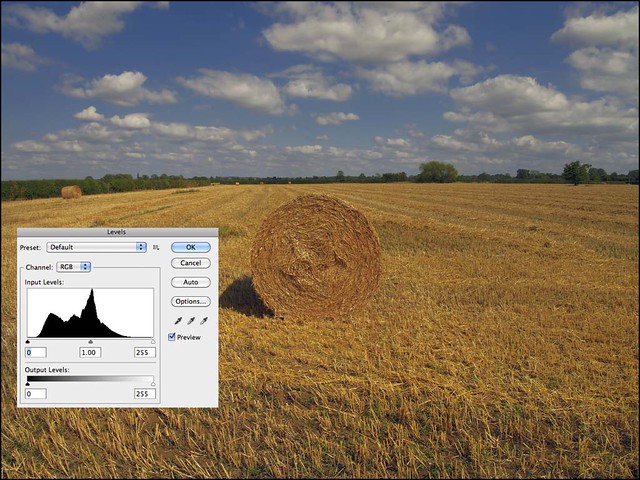
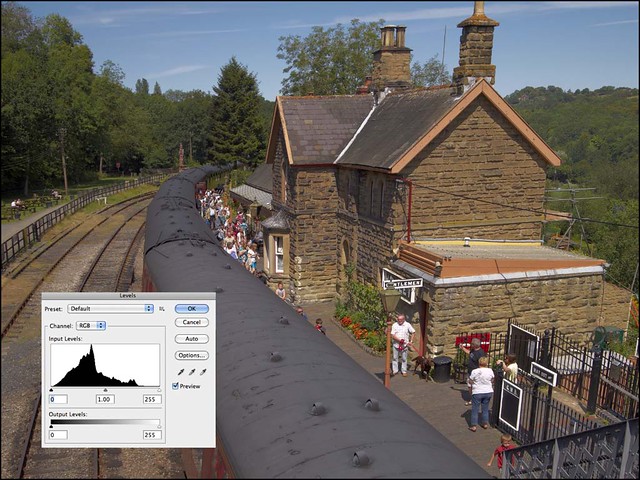
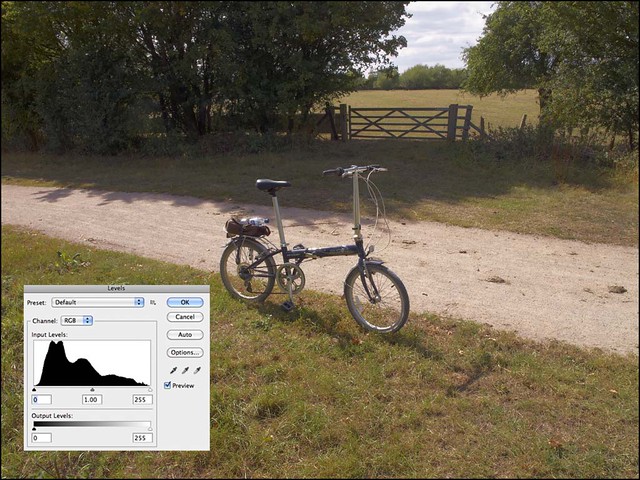
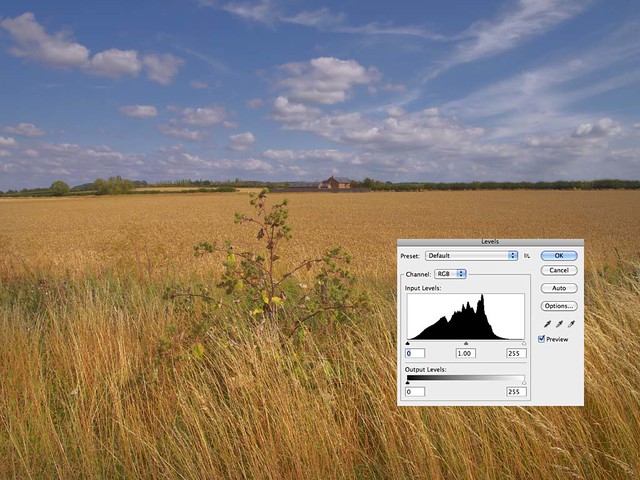
These were all taken in bright sunshine. The software has controlled the shadow and highlight areas very well, as you can see from the histograms, while still delivering good saturated colour and a "punchy" image.

Olympus E-PL1 Raw Capture One Pro

The common view is that m4/3 suffers from a poorer dynamic range, however as I'm constantly trying to demonstrate, when the images are exposed and processed with care, this "disadvantage" is nowhere near the problem that it is made out to be.

All of these images show that burnt-out highlights need not be the case, and that with a little thought and understanding as to how an image should be "correctly" exposed, a high quality file can be produced that has no problems when printed. 

Capture One Pro does this very well, and in many ways does it better than Photoshop because it has more options. Though a raw file from a m4/3 sensor does impose certain limitations, a good software package will make the best of it.

Capture One Pro is certainly very good indeed, and to my mind the best raw conversion software I've ever used.

Olympus E-PL1 Raw Capture One Pro

Monday, 8 August 2011

Olympus E-P3 compared to E-PL1 - ISO settings

jpg-SO


Comparison of ISO settings between E-P3 and E-PL1. Click through to flickr to see a larger version.


There's been some discussion as to how different the E-P3 sensor might be to previous Olympus Pens. I did a test of the respective cameras using the new 14-42mm lens. Above is how the jpgs are rendered using identical in-camera settings. 


The difference is actually minimal. It seems at higher ISO's the E-P3 has slightly less noise reduction applied. The E-P3 also has a slightly cooler colour balance.


I did a few raw comparisons, using the supplied raw conversion software, Olympus Viewer 2 and again the results were inconclusive. There does seem to be a marginal improvement in the high ISO performance of the E-P3, but again its not huge.


It does seem as though the E-P3 sensor is basically the same as the previous Pens.


I will do another comparison when the Photoshop ACR update is released, but for now it seems we basically have the same sensor with very minor tweaks.

Sunday, 31 July 2011

Olympus E-P3 Video


The video on the Olympus E-P3 is something that gets mentioned very rarely. Its now full 1920 x 1080 HD video, with AVCHD files. It follows on from the improvements in the E-PL's and is actually now pretty good.

The great thing is the in-body stabilisation which results in very smooth hand-held footage. Though the above sample has been run through iMovie and its stabilisation software, the raw footage is the best I've seen for smoothness. Indeed when shooting video, the live view image looks very stable and you can see the IS really working when you are recording. I shot the whole thing hand-held and was very pleased with the results.

Its another improvement of the E-P3 over the E-P2 and a very useful one.

However it does throw up a problem. The battery life of the E-P3 is terrible. There is absolutely no way that I will be able to go out for even an afternoons shooting with one battery. For a full days shooting I would have to take at least 3 and maybe 4 to be sure. While I think its a good idea for companies not to keep changing batteries, and Olympus do have the same model for all the Pens, its performance has always been poor, and the better screen on the E-P3 is probably contributing to the power drain.

Olympus E-P3 on location

Olympus E-P3 14-42mm lens
Olympus E-P3 14-42mm

Just when I thought that m4/3 was disappearing (literally!) into an ever smaller series of plastic gadgets, along comes the E-P3. It looks like a camera, feels like a camera and with a few improvements from Olympus, is a pretty good one too. 

I remember when the Panasonic GH2 I bought arrived and I opened the box. I had a sense of disappointment and my initial impression was that it looked and felt "cheap". I had no concerns about its performance, which was excellent, but I never found holding and using it a pleasure. It may have been a BMW under the hood but it was a Nissan Micra on the outside.

OK so thats overstating the case somewhat, but I've always struggled to actually like Panasonic m4/3 cameras, apart from the GF1, which was then spoilt by its really second-rate electronic viewfinder. 

The E-P3 on the other hand, looks and feels very classy. But is it the reverse? Sleek sports car on the outside, Nissan Micra on the inside?

Olympus E-P3 14-42mm lens
Olympus E-P3 14-42mm Olympus E-P3 14-42mm

Olympus E-P3 Voigtlander 75mm f/2.5 Heliar
Olympus E-P3 Voigtlander 75mm f/2.5 Heliar 

The E-P3 isn't a revolutionary upgrade by any means. From my somewhat limited use, the sensor seems to be very similar to whats gone before. However what has been upgraded, has made it the nicest of all the Pens to use. The AF is indeed very good, but I'm particularly impressed by the OLED screen and how it performs outdoors, by the more coherent re-designed menus and the slightly re-designed layout, which means that its a much more pleasant experience taking pictures with it as opposed to the E-P2.

Olympus E-P3 14-42mm lens
Olympus E-P3 14-42mm 

I'm not going to make any detailed comments about the image quality from the E-P3 until I get some decent software to process the raw files with. Currently I'm using Rawker and while its producing sharp results, there is no correction for CA or noise, which I'm doing manually in Photoshop. I'm also not going to do any assessment of how it performs in low light at high ISO's until the new version of Adobe Camera Raw, which supports it, is released.

So these early reports are about the handling and use only.

Olympus E-P3 14-42mm lens
Olympus E-P3 14-42mm 

USING MICRO FOUR THIRDS FOR LANDSCAPE AND LOCATION WORK.

I've written about this before but its useful to re-state the reasons I've used m4/3 for a lot of my work over the past few years.

Olympus E-P3 Voigtlander 75mm f/2.5 Heliar

Shooting landscape / travel / location images for my publication and stock photography work requires good light (sunlight), bright saturated colour, high image quality, the capacity to produce A3 files and lots of depth of field. MIcro four thirds has been able to provide this for me. The A3 file requirement is usually taken care of by shooting multi-images, which is not ideal & time-consuming, but works well.

The great advantage to me is the depth of field. On m4/3 I can shoot at f/5.6 with the wide-angles I use mainly and get high shutter speeds. Since I hand-hold virtually everything this makes for sharp pictures. Using full-frame I'd need to be shooting at f/11 to get the same DOF.

All m4/3 cameras have good saturated colour, are sharp and with careful processing look very good indeed at low ISO's. The trade-off is reduced dynamic range, and that does take care to make sure it doesn't ruin pictures with a lot of contrast. Plus the fact that if I do want to take pictures at a high ISO rating then I have to accept that it will look inferior to larger sensors.

So all in all m4/3 are great cameras for what I do. Add in the fact that they are small and light, so are less of burden on days that involve a lot of walking and you can see why I've been so enthusuastic for them.

Olympus E-P3 14-42mm lens
Olympus E-P3 14-42mm

So does the E-P3 give me any improvements over what I've used before.

ON THE PLUS SIDE

The AF is fast. Though the GH2 struck me as just as speedy.

The OLED screen is really very good indeed. Works with my polarised sunglasses. Still affected by sunlight but the best I've used.

The controls, menu, layout etc. are very similar to the E-PL's. Not perfect but I've got used to the Olympus layout now. Certainly way better than the Fuji X100 which I struggled with and a lot better than the E-P2.

The VF-2 electronic viewfinder is really good. I have no problem with the fact that its an add-on. I'm also convinced that the signal thats being fed into it is sharper and clearer than any other previous Pen.

I personally love the handling of the E-P3. The "rangefinder style" shape does suit me very well.

After a day using the kit lens, I think it is the best yet in terms of quality. Certainly it gives instant AF.

Though I need to see what the raw files can produce with decent software I certainly have no complaints so far.

If the 12mm f/2 and 45mm f/1.8 lenses perform as good as they look then the E-P3 will be a way of getting the best out of them as Panasonic cameras don't make all the"corrections" that this camera will.

ON THE NEGATIVE SIDE.

The loss of ISO 100. It may be the case that ISO 200 on the E-P3 is as good as ISO 100 on the E-P2, but I cannot confirm or deny that yet.

Using manual focus lenses is still more fiddly than with the Panasonics.

Very poor battery life.

An articulated screen would have been nice.

One of the reasons I've gone with Olympus rather than Panasonic is I suppose a question of philosophy. Olympus are a camera / optical company only. Panasonic are an electronics multi-national. Olympus, for me, have the edge in terms of design, style and if you like a respect for the traditions and conventions of camera manufacture and what makes them work for photographers. That's a personal thing I know, but I'm much happier working with something like the E-P3 rather than the current Panasonic or Sony small camera systems.

I think I'll enjoy using the E-P3. Certainly yesterday was a good start.

Olympus E-P3 14-42mm lens
Olympus E-P3 14-42mm

Finally a bit more camera porn. The E-P3 fitted with a Nikon 24mm f/2.8D.

Olympus E-P3 Nikon 24mm f/2.8D

Olympus E-P3 Nikon 24mm f/2.8D

Friday, 29 July 2011

Olympus E-P3 arrived today.

Olympus E-P3 14-42mm lens

Well it's here. And its gorgeous. To my eyes the best looking camera ever. Great to hold.

Olympus E-P3 14-42mm lens

The kit zoom is MUCH nicer. Better made, looks great, no telescope extension and a really solid feel. Very nice indeed. I normally sell these off really quickly on ebay, but this ones staying. Seem to perform exactly the same however.

Olympus E-P3 14-42mm lens

QUICK IMPRESSIONS.

Yes the AF is fast. Who knows whether its the fastest, but it feels instant to me, even going from near to infinity. 

The OLED screen is very good also. Very clear and sharp. Haven't used it in sunlight yet, so will report back on that. However, it functions perfectly, horizontally and vertically with polarised sunglasses. Hooray!!

Touch screen works very well. Instant focusing and taking the picture with only the slightest touch. However carrying it means you take lots of pictures as you're walking along, since the merest brush against my clothes meant it took a picture. Street photographers take note. The ultimate stealth camera.

Did I mention it looks gorgeous.

None of my previous leather cases fit it. However its sits very nicely inside my Zhou Leica M9 case.

Images quality looks much the same as previous Pens. However I need to check this out.

BUT - the colour has definitely been tweaked. Very saturated. Finally camera manufacturers are realising that the real world is full of rich colour. These images are both full of colour but they are realistic also.

Olympus E-P3 14-42mm lens

Olympus E-P3 14-42mm lens

Olympus E-P3 14-42mm lens

Removeable grip is interesting.

The battery hardly lasts anytime at all.

The bundled software - Olympus Viewer is just about the worst I've ever used. Truly dreadful. Please hurry up Adobe and release the next version of ACR.

Menus are slightly better, more like the E-PL1/2. Manual focusing is easier, uses the same method as the EPL's. 

It looks gorgeous.

More as I use it. 

My 12mm f/2 arrives Monday as well so that will be good.

More later - In the meantime here's some more camera porn!

Olympus E-P3 14-42mm lens

Olympus E-P3 14-42mm lens


Tuesday, 26 July 2011

Olympus E-PL1 and Leica M9 in the Severn Valley

Olympus E-PL1 14-42mm

For a day in the Severn Valley in Shropshire I took an Olympus E-P1 with the 14-42mm kit lens and Leica M9 with Zeiss 50mm f/2 T* Planar.

Leica M9 Zeiss 50mm f/2 T* Planar

One real complaint I have about the E-PL1 and indeed all the Pens is the battery life. I didn't have a spare and in fact did run out of power. Fortunately I had another camera. This really does need to be improved. Certainly the battery life for the Panasonic m4/3 cameras is a lot longer.

Olympus E-PL1 14-42mm

Again I'm pretty happy with the 14-42mm. Yes I get better results with lenses such as the Nikon primes I was testing yesterday, but the kit zoom is a decent lens, and particularly when used to create multi-shot stitched images.

Olympus E-PL1 14-42mm

Leica M9 Zeiss 50mm f/2 T* Planar

Leica M9 Zeiss 50mm f/2 T* Planar