Showing posts with label Zeiss 50mm f/2 T* Planar. Show all posts

Monday, 17 October 2011

Steel Grey and Black Machine


Leica M9 Zeiss T* Planar 50mm f/2  Olympus E-PL2 Panasonic Leica 25mm f/1.4 SummiluxLeica M9 Zeiss 50mm f/2 Planar
All images - Leica M9 Zeiss 50mm f/2 Planar

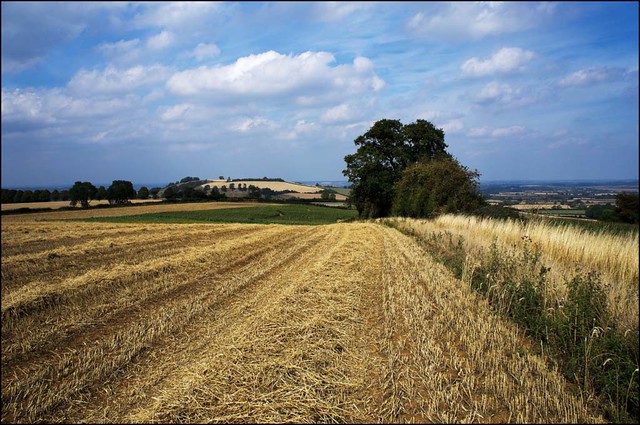
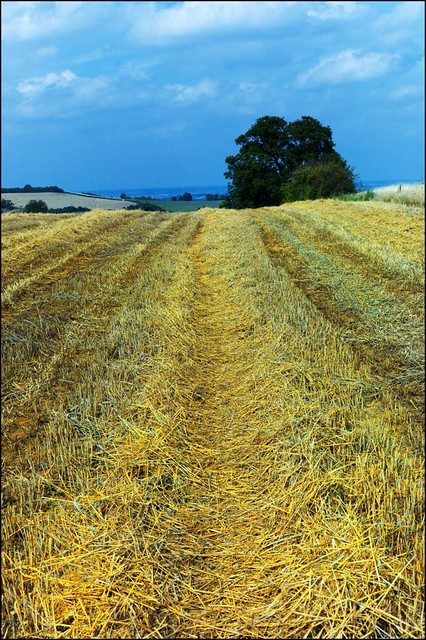
Beautiful light, Leica M9 and a Zeiss 50mm lens. No matter how close I get files from other cameras to look like this, the M9 still has the edge. This is a camera set up to reproduce with the same characteristics as film. Digital Fuji Velvia is a good description.

Leica M9 Zeiss 50mm f/2 Planar

Leica M9 Zeiss 50mm f/2 Planar

Leica M9 Zeiss 50mm f/2 Planar

Leica M9 Zeiss 50mm f/2 Planar

Leica M9 Zeiss 50mm f/2 Planar

Saturday, 17 September 2011

Why, how and when I use the cameras I do. Leica M9

Why, how and when I use the cameras I do - An occasional series of posts.
Fuji X100  Flash
Leica M9 Zeiss 50mm f/2 T* Planar

A personal review of the Leica M9.

WHY DID I BUY IT?

After using m4/3 I became interested in the possibilities of manual focus prime lenses, and bought a couple of m-mount (Voigtlander) lenses to use on my cameras. The size and simplicity of the Leica M8, which was their camera at the time, appealed to me. When Leica introduced a £500 cashback on the camera, I decided to give it a try. It was an experience that I enjoyed and the files, particularly the sharpness, was stunning.

I was using a Nikon D3X when the M9 was announced, and while I was impressed by the quality of the images, I was struggling with the weight and bulk of the camera. When I was able to see some raw files from the M9, I realised that even after upsizing, I would still get sharper files from the M9. I put my name down for an M9 and got one of the first ones in the UK. I sold my M8 and D3X to pay for it.

Leica M9 Zeiss 50mm f/2 T* Planar

Leica M9 Zeiss 50mm f/2 T* Planar

WHAT ARE THE POSITIVE POINTS FOR ME?

The sensor is full-frame, 18MP.
There is no anti-aliasing filter, so sharpness is maximised.
The sharpest results from any digital camera I've ever used.
Rich deep colour.
The possibility of using Leica and other m-mount lenses.
Excellent build quality.
Leicas hold their value.
1 year unconditional guarantee.
Simplicity of operation.
Easy to understand uncluttered menu.
Wonderful handling.
It looks great.
Rangefinder focusing (within limits) is accurate and fast.
The simplest and best way to focus manually (again within limits)

Leica M9 Zeiss 50mm f/2 T* Planar

WHAT ARE THE NEGATIVE POINTS FOR ME? 

Manual focus is often limiting.
The camera is very expensive, and I'm always worried about damaging it.
The lenses for it are very expensive, even Voigtlander and Zeiss.
Telephoto and macro lenses are very rare, very expensive and difficult to use.
There are problems with many ultra-wide lenses, vignetting and colour casts.
There are problems with moire, because of the lack of an AA filter.
For a camera with a "full-frame" or 35mm sized sensor it has poor dynamic range.
Though small, because of the metal construction, its quite heavy.
The sensor attracts a lot of dust spots and needs to be cleaned regularly.
Because of the dust spots and their quick build up, I don't tend to change lenses very often.
It takes time to get the best results from the raw files.

Leica M9 Zeiss 50mm f/2 T* Planar

WHAT DO I USE IT FOR?

When I want to produce top-quality files, for my landscape, location and travel stock photography. I often use it to produce very high-resolution panoramas, with incredible detail and sharpness. If I want really "punchy" colour and feel that the images I'm taking will be considered for large-scale reproduction, I take the Leica. I send my Leica files to those libraries that have clients who want high-quality images for print reproduction. Calendars, coffee table books, upmarket magazines and prints for corporate office decoration would be markets for Leica M9 images.

Leica M9 Zeiss 50mm f/2 T* Planar

HOW AND WHEN DO I USE IT?
I use the M9 when I have the time to work with it. Usually in the landscape or in a relatively quiet location. If I'm photographing in a town or city, or a busy tourist spot, I tend to use something else, because of the slowness of changing lenses and manually focusing all the time. Zoom lenses and AF are much more useful for me in that environment. Because I primarily use the Zeiss 50mm, because of the dust spot problem and because its the best lens I've ever used, if I want a wide-angle shot, I have to construct it from multi images and stitch it together later. This takes time, so I use the M9 in situations when I have that time. I tend not to use it if the light is changing rapidly, though I obviously can't always predict that.

I also use it when I think that the subject matter will suit it, and the incredible sharpness and rich colour will be of benefit. 

Leica M9 Zeiss 50mm f/2 T* Planar

Leica M9 Zeiss 50mm f/2 T* Planar

WHAT WOULD IMPROVE IT FOR ME?

A difficult question when considering a Leica M. Since once you start thinking of ways to "improve" a Leica M camera then it becomes something else. People often talk about EVF's and live view being added, but then it would just become "another" camera. Even though it has limitations, and its not something that I use for everything I do, when used to its strengths, I find its currently unbeatable.

I would like to see the moire problem being completely eliminated, though not at the expense of adding an AA filter. It would be a great help if they could find a way to stop the dust getting on the sensor and solving the vignetting/colour cast problem with ultra-wides would obviously be beneficial. There are some software fixes but these are far from 100% satisfactory.

Leica M9 Zeiss 50mm f/2 T* Planar

THE BOTTOM LINE.

Using an M9 requires a certain mindset. You have to value image quality above all else, and be prepared to put up with things you wouldn't in any other camera. Its partly because of the design limitations required to use m-mount lenses as they are meant to be used. There are ways to use them on other cameras, but nothing as yet that allows you to use them full-frame. Its partly tradition and partly because Leica have always done it that way and you can either put up with it or use something else. 

I'm not poor, but then I'm not rich either and I do have a lot of money tied up in my M9 and lenses. I often think I should sell it, but have never come even close to making that happen. I may not be happy with other cameras I use, and I'm normally pretty ruthless about shipping them out when I encounter problems, but then looking at the files produced by these other cameras, doesn't give me the jaw dropping reaction that looking at my M9 files does. And until I get that reaction from another camera the M9 will remain as part of my picture taking equipment. Its not just another camera, its THE camera, as far as I'm concerned. I forgive it a lot but I've made sacrifices to own it and I'll do the same to keep it.

Leica M9 Zeiss 50mm f/2 T* Planar
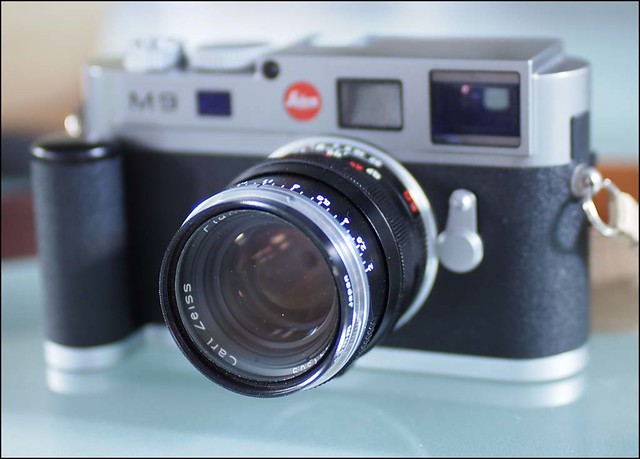
Leica M9 Zeiss 50mm f/2 T* Planar
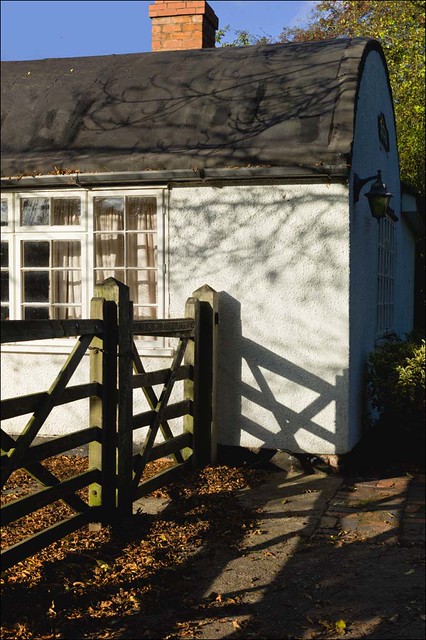


Saturday, 10 September 2011

Leica M9 - Zeiss 50mm f/2 T* Planar

Leica M9 50mm f/2 T* Planar

After using all kinds of electronic wonders and doing lots of testing and comparisons, its often very therapeutic to just go out with a manual focus camera and one lens. When the camera is the M9 and the lens is my Zeiss 50mm f/2 T* Planar, its a real pleasure as well.

Leica M9 50mm f/2 T* Planar

Leica M9 50mm f/2 T* Planar

Leica M9 50mm f/2 T* Planar

Leica M9 50mm f/2 T* Planar

Kit lenses - are they any good? - Part 4 - Sony NEX-C3 kit lens compared to m-mount primes

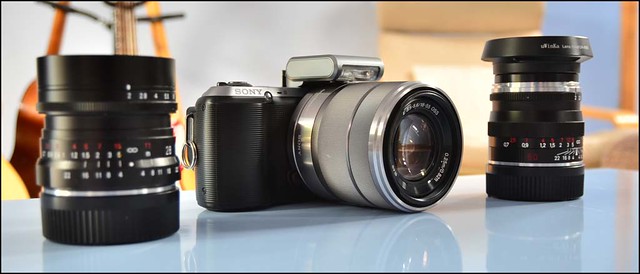
Sony NEX-C3 18-55mm kit zoom Voigtlander 28mm f/2 Ultron Zeiss 50mm f/2 T* Planar

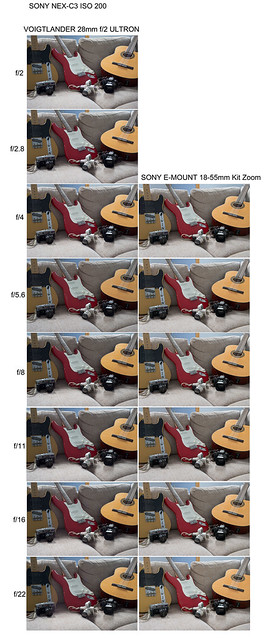
After looking at the m4/3 kit zooms, I decided to have a look at the 18-55mm zoom for the Sony NEX-C3 and compare it with two m-mount lenses I have.

First - Voigtlander 28mm f/2 Ultron

28mm on NEX-C3 comparison test

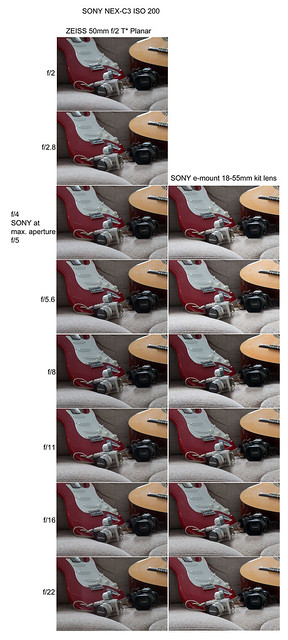
Second - Zeiss 50mm f/2 T* Planar

50mm on NEX-C3 comparison test 
50mm on NEX-C3 comparison test

As usual the test was done with the camera and lenses mounted on a tripod. All images were processed identically in Photoshop Adobe Camera Raw. For large versions of the test files - click through to flickr > Actions > View all sizes > Original.

As before here's a side by side comparison, shot at 28mm, with the zoom, on the left, compared to the Voigtlander.

28mm on NEX-C3 comparison test
28mm on NEX-C3 comparison test.


Which looks sharper?


I'm not going to make any comment on the 28mm comparison except to say that the "kit zoom" does very well here I think. I'll let you draw your own conclusions however, from the test. 

On the 50mm comparison, the Zeiss produces sharper results, but then it is the sharpest lens I've ever owned, so I would expect that. Again though, the zoom does very well, considering all the criticism that Sony e-mount lenses get.

I did a previous post on this zoom here:- 
in which I talked about how the lens can produce great results when processed from raw in Capture One Pro. Now the camera is supported by Photoshop and Lightroom (Also recently by Apple and Aperture) I repeat that view again. From what I've seen, I'm not quite sure why this lens comes in for all the criticism that it does, certainly with regard to how sharp it is.

All of this, is of course geared towards the arrival of the NEX-7. There is the question of whether the e-mount lenses are "up to" the challenge of a 24MP sensor. Personally I have no doubts that the 18-55mm "kit lens" will be able to produce good results, having seen what it will do on the NEX-C3 and the results I've seen from the new sensor in the A77. Sony would obviously be scoring an own goal if they turned out a great camera with a mediocre zoom bundled with it in a kit.

So again, have a look at the samples and see what you think.

Saturday, 3 September 2011

The "wrong" gear - Sony NEX-7 video

Sony NEX-C3 18-55mm
Sony NEX-C3 18-55mm

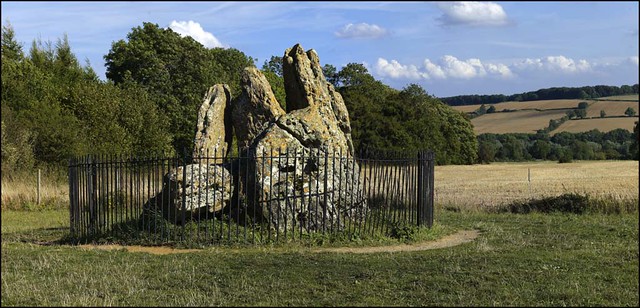
Ever selected your camera(s) and lens(es) thinking you are going to be shooting one thing and then you end up shooting something else? That happened to me yesterday. I was planning to be shooting in the grounds and garden of a stately home, but due to an unexpected closure, I ended up shooting landscape and some neolithic standing stones, including a rather stiff walk uphill. 

The NEX-C3 + 18-55mm zoom and the Leica M9 + 50mm I had with me would have worked very well for the situation I thought I was going to be in, but the lack of anything longer than the 55mm end of the zoom was not what I would have chosen for where I ended up.

Leica M9 50mm f/2
Leica M9 Zeiss 50mm f/2 T* Planar

However, I had to work with what I had. I ended up using the Sony most of the time, and towards the top of the hill I climbed I was regretting bringing the Leica. They look small and light but are actually quite heavy, and by the end of the day it was weighing heavily on my shoulder.

Leica M9 50mm f/2
Leica M9 Zeiss 50mm f/2 T* Planar

Sony NEX-C3 18-55mm
Sony NEX-C3 18-55mm

Sony NEX-C3 18-55mm
Sony NEX-C3 18-55mm

Hopefully, the decision of what to take me with me could be soon simplified somewhat. I'm  looking forward to seeing what the Sony NEX-7 I have on order can offer me. I'm really keen that this could lead to a huge rationalisation of what I'm using at the moment. If it does "what it says on the tin" then the combination of size, weight, image quality, file size, high ISO performance and handling could result in a lot of what I have on the shelf going off to ebay.

With that in mind I was interested to see this video that shows what its like to handle the camera.


Friday, 26 August 2011

Panasonic Leica 25mm f/1.4 Micro Four Thirds lens review - Part 2 - Just HOW good is the 25mm f/1.4

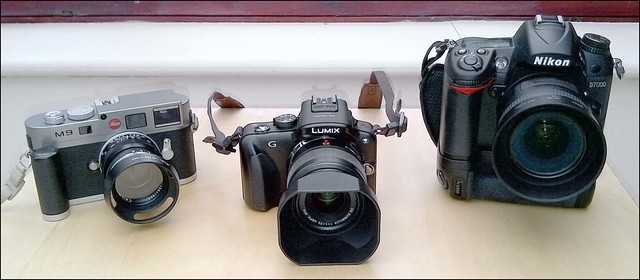
Panasonic Leica m4/3 25mm f/1.4 Lumix G3 Zeiss 50mm Nikon D7000 35mm f/1.8

I did a test between the Panasonic Leica m4/3 f/1.4 lens on a Panasonic G3 and a 35mm f/1.8 on a Nikon D7000 and just to make it interesting, my Zeiss 50mm f/2 T* Planar on my Leica M9.

(Please note - this file below is too big for flickr. If you want to download the full size version then either click on the image or this link. File is © David Taylor / Soundimageplus and is available for personal evaluation only and is not to be shared or used in any other way whatsoever.)
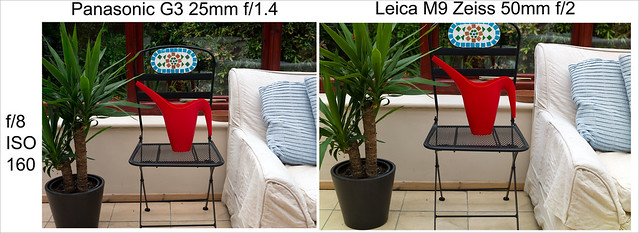
I've also put together a file from full-size images taken on the G3 and the M9 at f/8 and ISO 160. You can see the high resolution image by clicking through to flickr and choosing Actions > View all sizes.

Panasonic Leica m4/3 25mm f/1.4 Lumix G3 Zeiss 50mm

As per usual these images were shot on a tripod and processed via Photoshop Adobe Camera Raw using the default factory settings. All files were processed in an indentical fashion. There are differences in depth-of-field, colour and framing but all images were shot from exactly the same position. 

The results show that the Panasonic Leica 25mm f/1.4 is indeed a very good lens indeed. Better than the 35mm f/1.8 on the Nikon (Though the stronger anti-aliasing filter on the D7000 has an impact on this) and is really close to the Zeiss 50mm on the Leica M9. 

I really can't decide which is better. If I stare at the files for long enough, then I think I see that the Leica version is the sharpest, but once I take into account the fact that there is more depth of field on the m4/3 shot, and therefore more of the image is in focus, I must concede that I prefer the image with Panasonic camera / lens combination.

Again I must make it clear that this is very much to do with the way that I work, and what I'm looking for in a lens camera / combination. I'm usually trying to achieve the most DOF that I can get, and the vast majority of what I shoot is at the lowest ISO that gives me a workable hand held shutter speed. 

In terms of a comparison between the Leica and the G3, neither is any great shakes at high ISO and the M9 is very poor at dynamic range also, even though it is "full-frame". So bit by bit the advantages that I get from the camera and the m-mount lenses are being eroded. Add in the fact that Panasonic are now talking about light, small pro-spec zooms - http://www.43rumors.com/ft5-hot-panasonic-x-12-35-and-35-100mm-fast-zooms/ and for what I do m4/3 becomes an ever more attractive, (and significantly cheaper!) option. 

I must admit, I didn't expect the 25mm f/1.4 to be quite as good. I was expecting something on a par with the four thirds version of this lens I think, and something that was probably somewhat better than the 20mm f/1.7, but not by much.

However I think it's better than that. True, the weak AA filter of the G3 gives it the opportunity to shine, however it does perform very well in its own right. 

Do have a look at the high-res. samples and particularly the raw files in the previous post to see if you agree with me. 

However if you like what you see and you use Olympus cameras I would recommend a try-out before you buy, to see if yours clicks away like mine does on those cameras.


Friday, 29 July 2011

Evening light

Leica M9 Zeiss 50mm f/2 T* Planar
Multi shot panoramic stitch

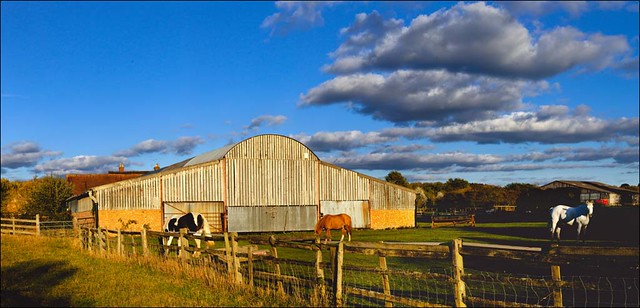
Some lovely warm evening light with a Leica M9 and Zeiss 50mm f/2 T* Planar

Leica M9 Zeiss 50mm f/2 T* Planar
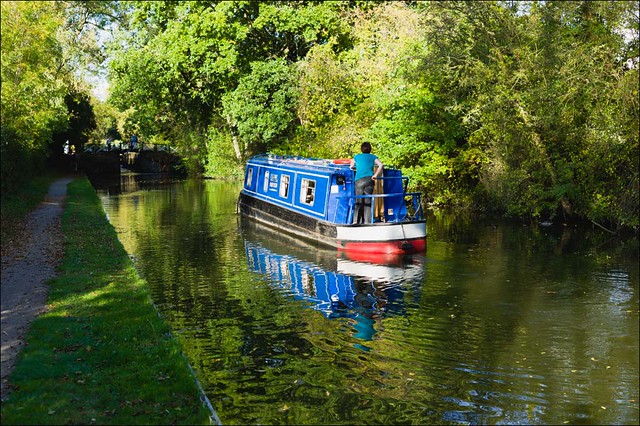
Leica M9 Zeiss 50mm f/2 T* Planar

Leica M9 Zeiss 50mm f/2 T* Planar
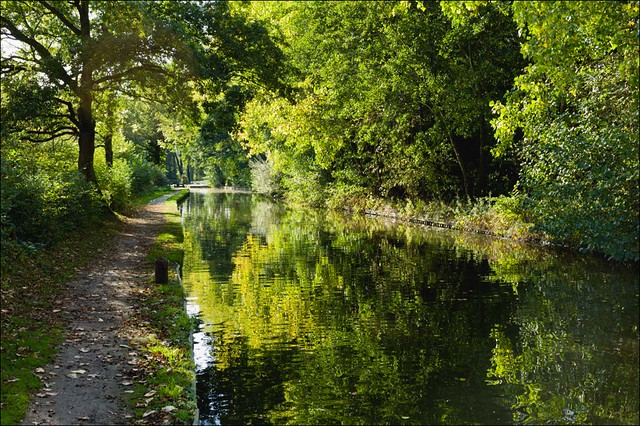
Leica M9 Zeiss 50mm f/2 T* Planar
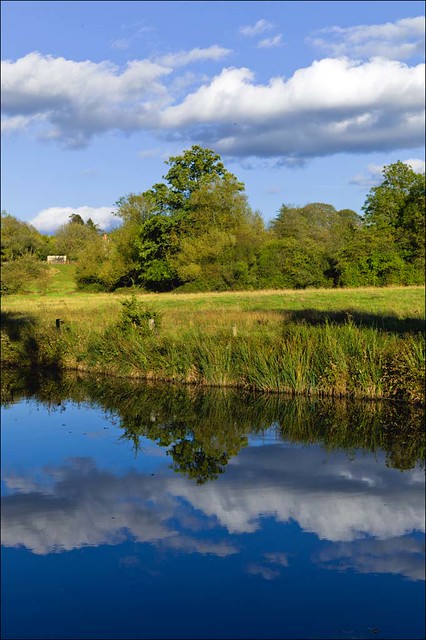
Tuesday, 26 July 2011

Olympus E-PL1 and Leica M9 in the Severn Valley

Olympus E-PL1 14-42mm

For a day in the Severn Valley in Shropshire I took an Olympus E-P1 with the 14-42mm kit lens and Leica M9 with Zeiss 50mm f/2 T* Planar.

Leica M9 Zeiss 50mm f/2 T* Planar
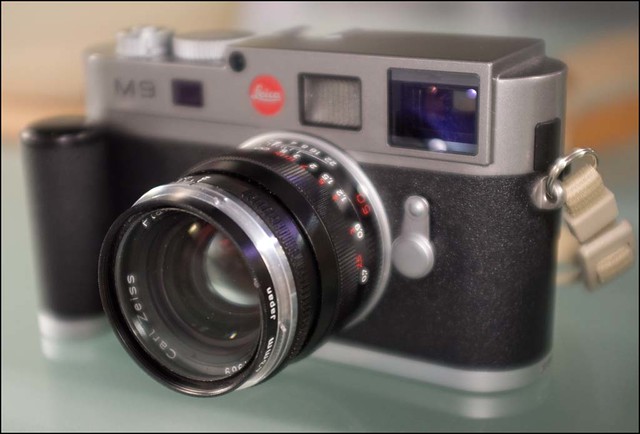
One real complaint I have about the E-PL1 and indeed all the Pens is the battery life. I didn't have a spare and in fact did run out of power. Fortunately I had another camera. This really does need to be improved. Certainly the battery life for the Panasonic m4/3 cameras is a lot longer.

Olympus E-PL1 14-42mm

Again I'm pretty happy with the 14-42mm. Yes I get better results with lenses such as the Nikon primes I was testing yesterday, but the kit zoom is a decent lens, and particularly when used to create multi-shot stitched images.

Olympus E-PL1 14-42mm

Leica M9 Zeiss 50mm f/2 T* Planar

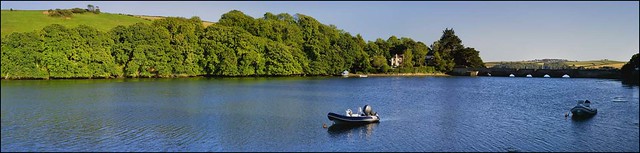
Leica M9 Zeiss 50mm f/2 T* Planar

Sunday, 17 July 2011

Just how good is the Nikon D7000 image quality? - Comparison with Leica M9

Nikon D7000 35mm f/1.8 DX lens Leica M9 Zeiss 50mm f/2 T* Planar
Ever since I bought the Nikon D7000 and D5100 cameras a few weeks ago, I've been very impressed with the image quality. Particularly using the cameras with prime lenses. I decided to test this. I compared the D7000 fitted with a 35mm f/1.8 DX lens with my Leica M9 fitted with a Zeiss 50mm f/2 T* Planar.

Both cameras were tripod mounted, set to aperture priority and I took pictures at f/2, f/5.6 & F/11. ISO 160 was used since this is the base ISO of the Leica.

Here are the results. If you click them through to flickr > Actions > View all sizes you can see the files at full size / resolution.

A comparison between a Nikon D7000 fitted with a 35mm f/1.8 DX lens and a Leica M9 fitted with a Zeiss 50mm f/2 T* Planar lens.
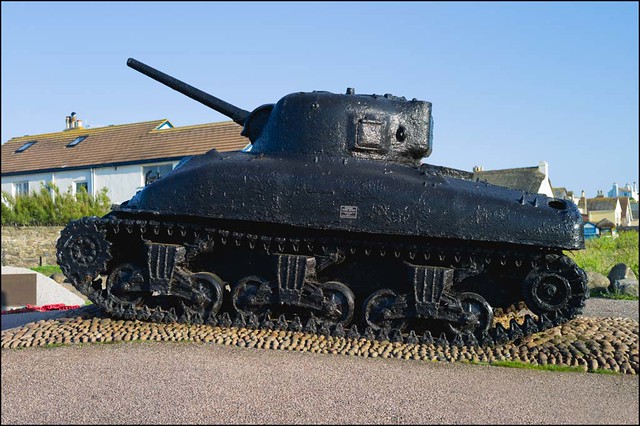
A comparison between a Nikon D7000 fitted with a 35mm f/1.8 DX lens and a Leica M9 fitted with a Zeiss 50mm f/2 T* Planar lens.
A comparison between a Nikon D7000 fitted with a 35mm f/1.8 DX lens and a Leica M9 fitted with a Zeiss 50mm f/2 T* Planar lens.

Both files were shot raw and processed via ACR in Photoshop, using that programmes basic Raw default settings. The images were processed together using exactly the same settings. As you can see there's a difference in colour balance. Neither incidentally is 100% accurate though the Nikon is closer in terms of the blue wall.

The surprise was just how close they are in terms of sharpness. When you take into consideration the fact that the Nikon's Sony Exmor sensor has an anti-aliasing filter and the M9 doesn't, I was VERY impressed by the Nikon files. I was also very impressed by the performance of the 35mm f/1.8 lens. I've always liked the lens and in fact used one on a D3X for a while, as it didn't vignette much at wide apertures on that full-frame camera.

For me, it shows just how much sensor technology is improving, and just how good these latest APS-C Nikons are compared to previous models. From yesterdays post - http://soundimageplus.blogspot.com/2011/07/more-nikon-d7000-high-resolution-multi.html with the multi-image stitches, I believe I'm getting results every bit as good as from the D3X and Sony a850 cameras I used. Getting these results from a smaller, lighter, cheaper, more versatile and better specified camera is a bonus. 

I think the Leica / Zeiss combination just shades it in terms of sharpness, but not by much. The Leica has other virtues in terms of colour depth and overall punch. See - http://soundimageplus.blogspot.com/2011/07/leica-m9-late-evening-light.html but the D7000, and by virtue of the fact it uses the same sensor, the D5100, are very impressive indeed. When you take into consideration the price of the D5100, you get a lot of bang for your buck!

Nikon D7000 35mm f/1.8 DX lens Leica M9 Zeiss 50mm f/2 T* Planar